This week, we hear from guest-blogger, James H. Duncan, who discusses his poem “Last Appointment of the Day.”
I sometimes contemplate whether or not it was wrong of me to think, upon discovering I had cancer, “I don’t want to be a cancer poet.” Please understand I don’t think there’s anything wrong with a poet exploring that experience, especially when it’s their experience, but there’s a fear of being boxed in that comes with writing about this new life. There’s a worry that this disease will overwhelm the creative desires and processes and narrow the vision.
I’ve made an effort to write about as broad a life as possible, but fighting against the sea change was a losing cause, as cancer will eat away at your existence in constant, subtle (and not so subtle) ways, just as it will your body. As such, I began noticing the details of this new life coming to the fore and calling for attention. So I gave it, and I found that writing about those details, rather than the overwhelming fears that came with this harrowing journey, comforting, rewarding even.
One of the details I noticed, repeatedly and quite hauntingly, was the empty waiting room. This limbo territory I found in doctors’ offices, hospitals, and labs became a fascination. Sometimes, they weren’t empty, but even the small groups, couples, or individuals felt remote from one another—separate tribes wandering a strange land, quiet and wary of what came next. When empty, the rooms were still littered with the detritus of those who came before and moved on, and for all we knew, may never return. How many people have read that Time or Elle? How many children that Highlights magazine? Who else has tapped on the tank of lethargic fish gurgling out an existence in the window overlooking Madison and 53rd Street? The song playing overhead from dusty speakers embedded into drop-ceilings, who else heard that muffled tune and didn’t realize that maybe it was the last song they’d ever hear?
Details like these made the experience not one of being “a cancer patient” but of being a human working through a homogenous system of rooms and regulations, of dulled grays and beiges meant to comfort but somehow dehumanizing the movement from healthy to dead, or at least being lost somewhere in between. I suppose it does circle back to some of the great fears we have, the core human emotions—loneliness and the uncertainty of what lies behind that final door. It’s something we can only know for sure once we’ve walked through it, our final appointment with the last grim doctor any of us will ever see.
Out of this experience came the poem, “Last Appointment of the Day,” which appeared in Kleft Jaw #4 and is slated to appear in my upcoming chapbook We Are All Terminal But This Exit Is Mine. I hope you enjoy the poem, or at least, can relate to it. Then again, perhaps it’s for the better if you can’t and never will. If only.
Last Appointment of the Day
across the table where picture books and
children’s magazines wait for small hands,
across the green carpet where plastic cars
and wooden jigsaw puzzles lie patiently
for children who may never return
there is a fish tank, the saddest looking pit
of gloom ever, dark as a thunderhead
in tornado alley, listless fish waiting
on death, floating nowhere in the murk
there’s a scream in my mind but there’s
no sound, like a horror film on mute,
internal and forever, and all these
empty chairs surrounding me
the receptionist calls out my name
so I get up and go inside while music plays
from somewhere overhead
as they shut the door behind me
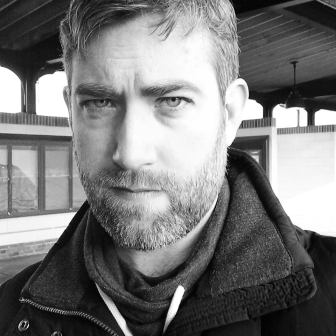
James H Duncan is the editor of Hobo Camp Review, a former editor with Writer’s Digest, and is the author of What Lies In Wait, Berlin, Dead City Jazz, and other collections of poetry and short fiction. His work has appeared in American Artist, Up The Staircase, 3:AM Magazine, Boned, and Poetry Salzburg Review, among other journals. He resides in upstate New York. For more visit www.jameshduncan.com.
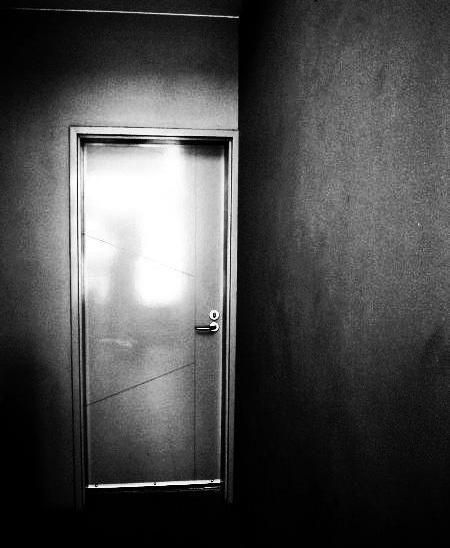
Photo Credit: the dark door by adamy on deviantart
http://pezcame.com/ZGFyayBkb29y/



 Shanti Weiland